From finding needles to connecting dots.
Financial crime has changed significantly over the last decade. The systems and operating models designed to fight it largely haven’t.
A decade ago, financial crime detection was often framed as a needle-in-the-haystack problem: finding the suspicious transaction, customer or name among millions of legitimate ones.
Today, increasingly, it is a connect-the-dots problem. A customer may look legitimate. A transaction may appear ordinary. A counterparty may raise no obvious red flag. Risk emerges when behaviors, relationships, transactions and entities are connected.
A modern Anti-Financial Crime program must therefore do more than detect isolated signals. It needs to connect intelligence across customers, transactions, relationships and financial crime domains, understand that intelligence in context, and act on it in time.
This campaign challenges assumptions and explores what good Anti-Financial Crime Compliance looks like today.
𝗙𝗶𝗻𝗮𝗻𝗰𝗶𝗮𝗹 𝗰𝗿𝗶𝗺𝗲 𝘁𝗵𝗿𝗶𝘃𝗲𝘀 𝗶𝗻 𝘀𝗶𝗹𝗼𝘀 𝗯𝗲𝗰𝗮𝘂𝘀𝗲 𝗻𝗼 𝗼𝗻𝗲 𝗶𝘀 𝗮𝗹𝗹𝗼𝘄𝗲𝗱 𝘁𝗼 𝘀𝗲𝗲 𝘁𝗵𝗲 𝗳𝘂𝗹𝗹 𝗽𝗶𝗰𝘁𝘂𝗿𝗲.

When financial crime is viewed through isolated systems, teams and controls, each sees only part of the picture. A transaction may look legitimate on its own. A customer may appear low risk in one system. A relationship may seem insignificant when disconnected from everything around it. Each individual view can make sense, while the full picture tells a very different story.
A modern AFC program requires connecting the dots across KYC, transaction monitoring, sanctions, fraud and other financial crime domains to create a holistic view of risk.
Siron®One connects intelligence across customers, transactions and relationships, bringing data, detection and investigation together across financial crime domains so that teams can identify patterns and risks that remain invisible when viewed in isolation.
Want to explore the thinking behind this campaign?
Read our white paper on why a holistic approach to Anti-Financial Crime is becoming a strategic necessity.
Most financial crime doesn’t start with criminals — it starts with ordinary customers.

Financial crime doesn’t always start with someone who looks like a criminal, and it rarely announces itself at onboarding.
Legitimate customers change behavior, encounter new counterparties and channels, or become involved in suspicious activity, knowingly or unknowingly. What looked normal yesterday may carry very different risk today. That makes static labels and point-in-time assessments insufficient.
A modern AFC program requires a continuous understanding of customer behavior and the ability to recognize meaningful deviations as they emerge.
Siron®One combines rules, behavioral analytics and machine learning to continuously evaluate activity, compare behavior over time and against relevant peers, and identify changes that may signal emerging financial crime risk.
Want to read more about this topic?
Read our article Powering the Risk-Based Approach with Dynamic Risk Scoring and AI-Driven Profiling
When your view of a customer is fragmented, so is your understanding of their risk.
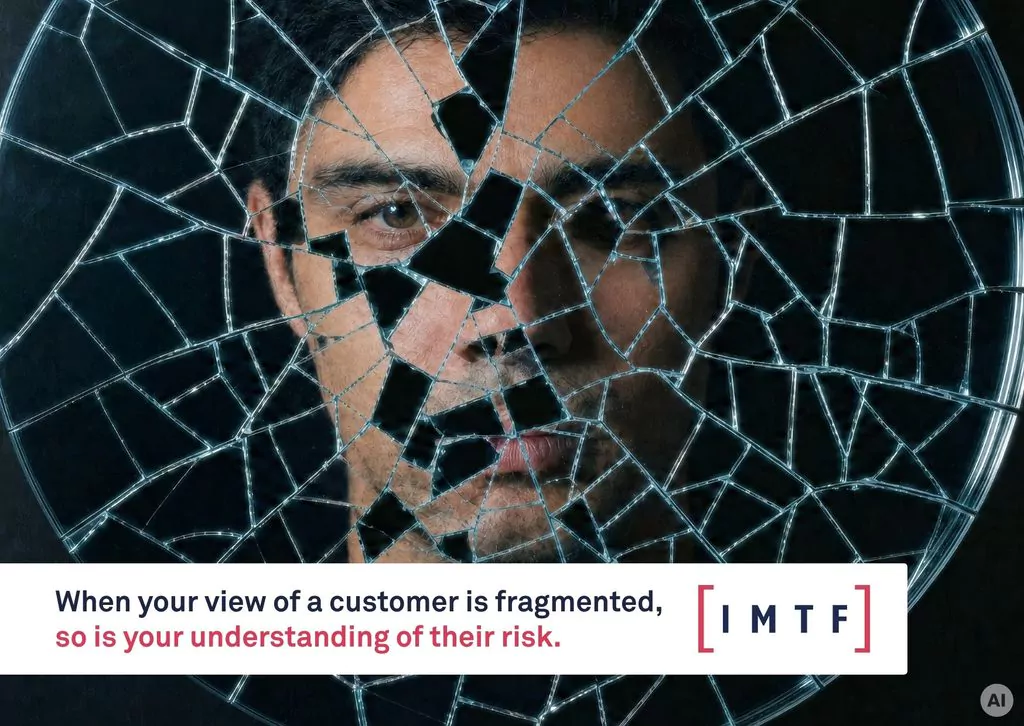
A customer’s risk profile is shaped by information across onboarding records, transactions, screening results, alerts, cases and historical interactions. When that information sits across disconnected systems, each control sees only a fragment. Important relationships and context can be missed, and different teams may reach different conclusions based on different views of the same customer.
A modern AFC program requires a connected, holistic view of the customer, bringing together the information needed to understand risk in its full context.
Siron®One connects customer, transaction, screening, risk and case information into a holistic Customer 360 view, enabling teams to understand individual events in the context of the customer’s broader behavior, relationships and history, and make more informed and consistent risk decisions across the customer lifecycle.
Want to read more about this topic?
Read our white paper on why a holistic approach to Anti-Financial Crime is becoming a strategic necessity.
If detection happens after settlement, it’s not risk management — it’s archeology.
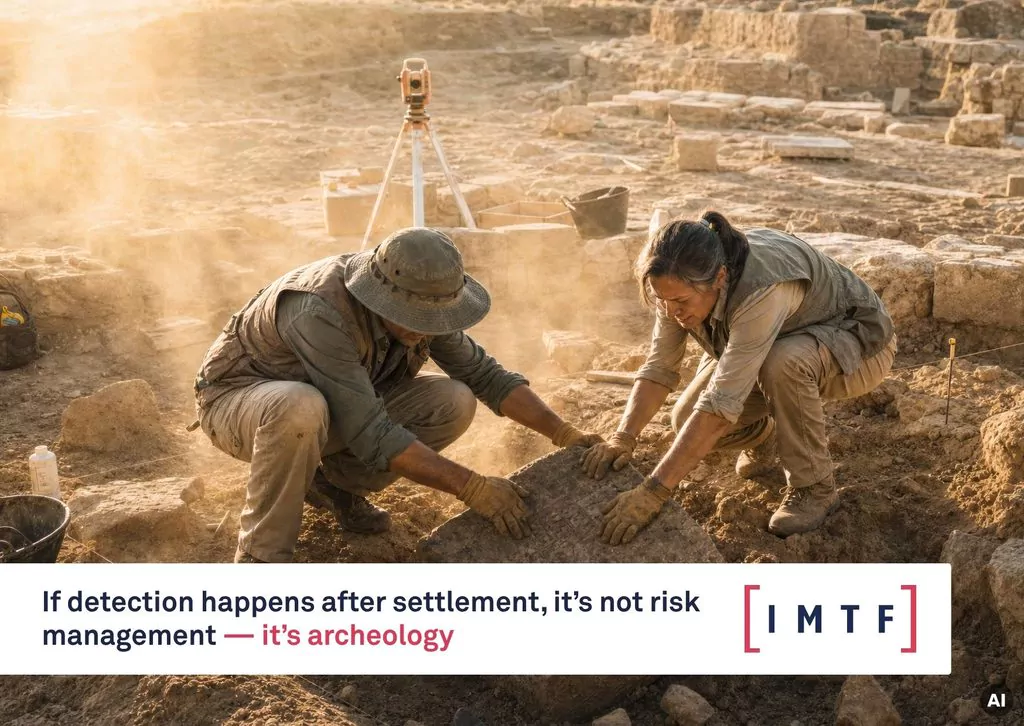
The financial system has moved from days to seconds. Financial crime has accelerated with it. Yet much of traditional AML still relies on batch processing and retrospective analysis, identifying suspicious activity only after transactions have already been executed. In a world of instant payments and increasingly digital financial crime, time has become another dimension of risk.
A modern AFC program requires more than processing existing controls faster. It means assessing risk at the moment a transaction takes place, combining the transaction itself with the customer’s risk profile, past behavior, peer-group comparisons, relationships and other contextual information.
Siron®One combines real-time transaction screening with behavioural analytics, configurable rules and automated workflows to assess activity as it happens and generate immediate risk signals, helping institutions move from investigating the past toward intervening when it still matters.
Is your institution ready for the real-time financial system?
Read our white paper and discover how to prepare your AML operations for the future
The biggest sanctions blind spots aren’t on the map — they’re the ones you choose not to see.
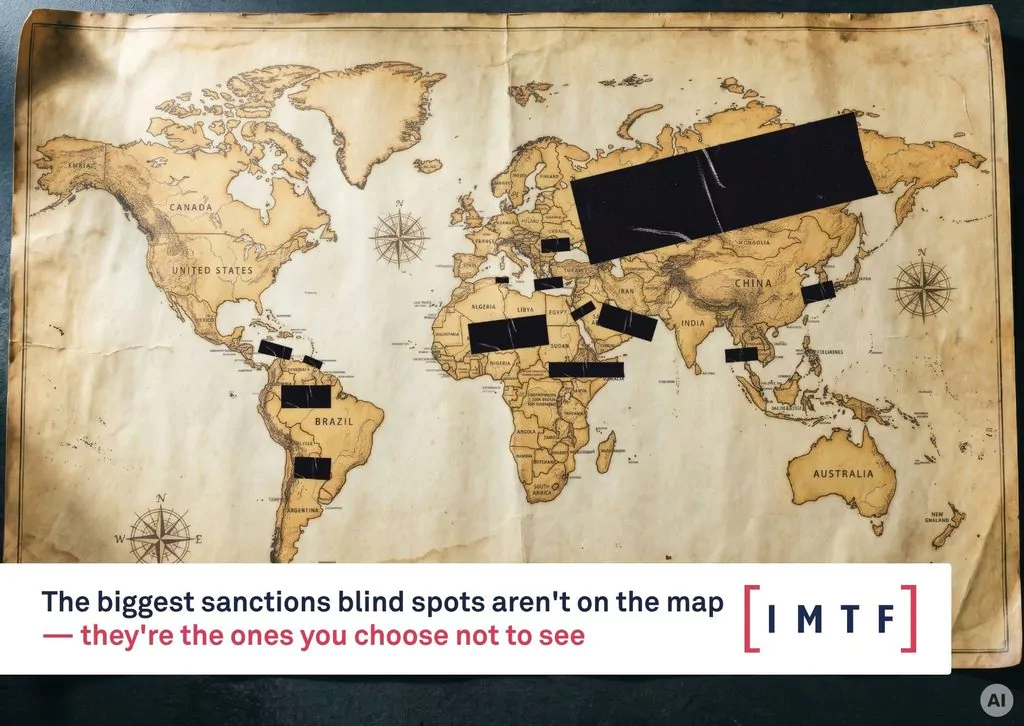
Sanctions risk is not defined by geography alone. Exposure can be hidden behind complex ownership structures, intermediaries, counterparties and payment chains that obscure who is ultimately involved in a transaction or business relationship.
In cross-border payments and trade finance, multiple parties, jurisdictions and financial institutions can make those connections even harder to see.
Siron®One combines real-time sanctions screening with customer and transaction context, advanced matching and network analysis to help identify sanctions exposure and hidden relationships, while integrated case management supports informed, traceable decisions.
A modern AFC program needs to look beyond the obvious name or country match, connecting sanctions screening with customer, transaction, ownership and relationship data to understand who is really involved, how the parties are connected and where the underlying risk lies.
Read more about Trade Finance Compliance
If a deal requires three specialists to explain, it deserves one person to stop it.
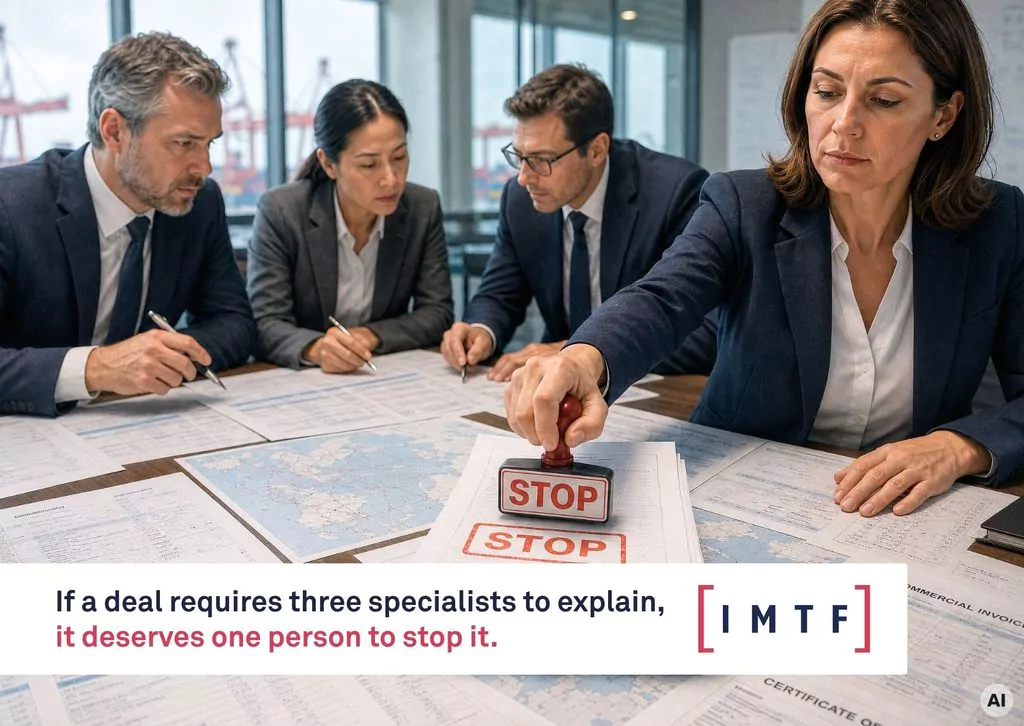
Trade finance demonstrates just how complex the connect-the-dots challenge can become. A single deal can involve multiple parties, jurisdictions, documents, goods, vessels, counterparties and payment flows. Each element may appear legitimate on its own while the combination tells a very different story.
A modern AFC program needs to connect trade, customer, transaction and third-party data to identify inconsistencies, hidden relationships and suspicious patterns across the full trade lifecycle, without removing human judgment from the decision.
Siron®One brings together KYC/KYB, transaction monitoring, sanctions screening, document intelligence and network analysis to create a connected view of trade finance risk, helping compliance teams investigate complex activity and take informed action when something doesn’t add up.
Want to read more about this topic?
Read our article When Trade Becomes a Cover: Unpacking Trade-Based Money Laundering
Tear down the walls, and see a whole layer of crime the siloed model was built to miss.

Financial crime doesn’t organize itself around KYC, transaction monitoring, sanctions, fraud or investigations. It moves across customers, accounts, transactions, counterparties and channels, exploiting the gaps between them.
Yet many financial institutions still fight it through separate teams, systems and controls. Each may see something. But when those views remain isolated, the connections between seemingly unrelated signals can remain hidden.
A modern AFC program needs to break down those walls and connect intelligence across financial crime domains, revealing patterns and risks that siloed approaches can miss.
Because financial crime is increasingly a connect-the-dots problem. And you can’t connect the dots if they’re kept in different rooms.
Interested in reading more about this topic?
Read our white paper on why a holistic approach to Anti-Financial Crime is becoming a strategic necessity.